Education

Clinical Chemistry Fellowship

The Department of Pathology at The University of Chicago offers a two-year postdoctoral fellowship in Clinical Chemistry starting July of every year. Clinical chemistry employs chemical, genomics, proteomics and metabolomics applications in the assessment of health and disease. These laboratory data are used for diagnosis, prognosis and monitoring of disease, and guiding therapy in clinical medicine. This training program will prepare the successful candidate for a career in clinical chemistry and laboratory medicine. Fellows are expected to take the American Board of Clinical Chemistry (ABCC) examination by the completion of the program.

Essential functions include:

  1. Participate and manage clinical research projects in Clinical Chemistry, Clinical Mass Spectrometry & Clinical Pharmacogenomics that includes research, development, and validation of emerging biomarkers in clinical laboratory medicine, especially in the areas of pharmacogenomics, mass spectrometry and cardiology. Perform method validations and assist in implementation of new clinical chemistry tests. Provide consultations of clinical chemistry testing under the supervision of the laboratory director. Collaborate with clinical researchers to develop and provide appropriate clinical testing required for translational research projects as directed by the laboratory director.
  2. Participate in the education of students, pathology residents in clinical chemistry and pharmacogenomics. Be current with publications in clinical chemistry and laboratory medicine. Prepare and present cases and findings at several departmental and multidisciplinary conferences.
  3. Present research findings at national meetings and publish work in appropriate journals.

Fellowship Director
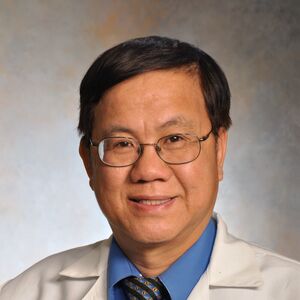
Jerry Yeo

Jerry Yeo, PhD, DABCC

Clinical Professor of Pathology

Director, Clinical Chemistry Research & Postdoctoral Training Program

Director, Clinical Pharmacogenomics & Mass Spectrometry Laboratories

To be considered for the program, prospective fellows must have:

  1. An earned doctoral degree (PhD) in biochemistry, analytical chemistry, pharmacology, molecular biology, or a related biomedical science or a MD/DO degree with preferably 1-2 years of research experience in a research laboratory.     
  2. Applicants are limited to those within the first 3 years of their first doctoral degree per institutional policy, to allow for the completion of the training by year five.
  3. Satisfactorily completed a minimum of 30 semester hours (U.S. equivalent) in undergraduate and/or graduate level chemistry or biochemistry courses prior to admission into the program to meet certification eligibility requirements by the American Board of Clinical Chemistry. (https://abclinchem.org/application-guidelines/).  If your transcripts do not indicate that you meet the minimum of 30 credits, your application will not be considered.

Applications may be submitted starting in June for a position beginning the following July.  We may conduct informal discussions by phone or at ADLM conference before arranging formal interviews.

The application packet must include:

  1. Cover letter with personal statement of interest (2-page maximum)
  2. Updated Curriculum Vitae
  3. Undergraduate and PhD transcripts. Applicants with education obtained outside US or Canada must also, at their own expense, have their credentials evaluated by the International Education Research Foundations, Inc, or similar credentialing agency.
  4. Three letters of recommendation to be emailed directly to the Program Director.

Submit via email to program coordinator (Franco Sambataro) with a copy sent to program director (Dr. Jerry Yeo).  Incomplete applications will not be considered.

Postdoctoral Training Level
Number of positions available per year: 1 per year
Duration of program: 2 years
Approximate annual salary or stipend: PGY Scale
Current number of trainees: 2
Number of past graduates: 10
  • 2028-2030: Inquire in June 2027
Fellows Fellowship Years Post-Training Position
Ashley Ogorek, PhD, DABCC 2024-2026

Clinical Chemistry Consultant

Email: ashogorek@gmail.com 

Guanmin Chen, PhD, DABCC 2023-2025

Associate Technical Director, Routine Esoterix Laboratories, LabCorp, Calabasas, CA. 

Email: guanmin.chen@labcorp.com 

Clarence Chan, MD, PhD, DABCC 2021-2023 Associate Director of Clinical Chemistry Laboratories & Assistant Professor of Pathology, University of Chicago, Chicago, IL.                Email: Clarence.Chan@bsd.uchicago.edu 
Anastasia Gant Kanegusuku, PhD, DABCC 2021-2023

Medical Director of Regional Core Laboratory & Assistant Professor of Pathology & Laboratory Medicine, Loyola University Medical Center, Chicago, IL. 

Email: Anastasia.Kanegusuku@lumc.edu 

Nga Yeung Phyllis Tang, PhD, DABCC, NRCC 2018-2020 Director of Clinical Chemistry & Point of Care Testing & Assistant Professor of Pathology.  University of Illinois, Chicago, IL.                  Email: nytang@uic.edu 
Maximo J. Marin, MD 2017-2018

Medical Director of Shands Core Laboratory & Clinical Assistant Professor of Pathology, Immunology & Laboratory Medicine, University of Florida, Gainesville, FL.                                             

Email: maximo.marin@ufl.edu 

Yifei Yang, PhD DABCC 2016-2017 Associate Director & Assistant Professor, Advanced Translational Laboratory, Laboratory Medicine & Pathology
Mayo Clinic, Rochester, MN
Email: yang.yifei@mayo.edu
Siaw Li Amy Chan, PhD, DABCC, NRCC 2015-2017 Director of Chemistry, Immunology and POCT
Nuvance Health
Danbury, CT
Email: SiawLi.Chan@nuvancehealth.org
Xin Yi, PhD DABCC 2013-2015

Co-Director of Clinical Chemistry & Associate Professor of Clinical Pathology & Genomic Medicine.  Houston Methodist Hospital, Houston, Tx.                                                       

Email: xyi@houstonmethodist.org 

Edward Ki Yun Leung, PhD DABCC FAACC 2012-2014

Director of Core Laboratory & Associate Professor of Clinical Pathology. Children's Hospital of Los Angeles & Keck School of Medicine, Los Angeles, CA.                             

Email: edleung@chla.usc.edu